Main House Second Floor
 Cochran Bedroom
Bessie and Thomas Cochran moved in to the house in 1893 and purchased the property two years later. This room has been decorated to reflect the Cochrans' style and features furnishings that were in the house while the Cochrans lived here.
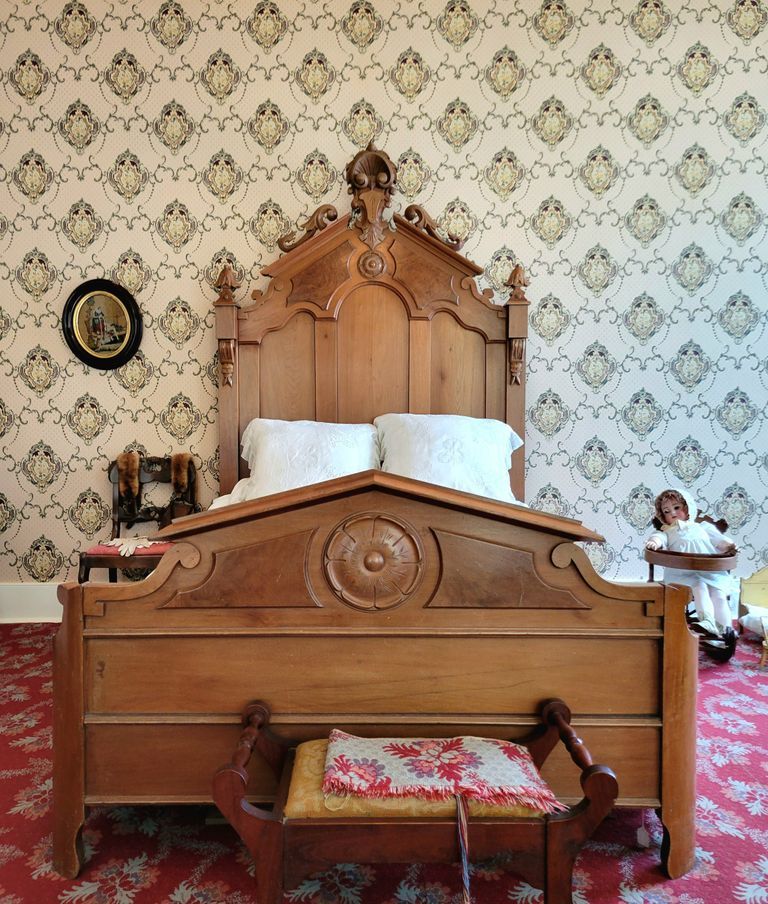
American, Victorian, Renaissance Revival 4 piece full-size bedframe consisting of 2 siderails, 1 footboard, and a headboard with a tall-pedimented crest centered by a large cartouche with acanthus and bosses above an oval panel of burled walnut, the footboard with a low peaked rail and squared corners; with slats. The bed is Eastlake in style, a 19th century movement started by architect and writer Charles Eastlake. Characterized by geometric shapes, low relief carvings, and incised lines, Eastlake style was a reaction against both the extravagance of high-style Rococo Revival design and the "soulless" mass-produced furniture that became widely available through industrialization.
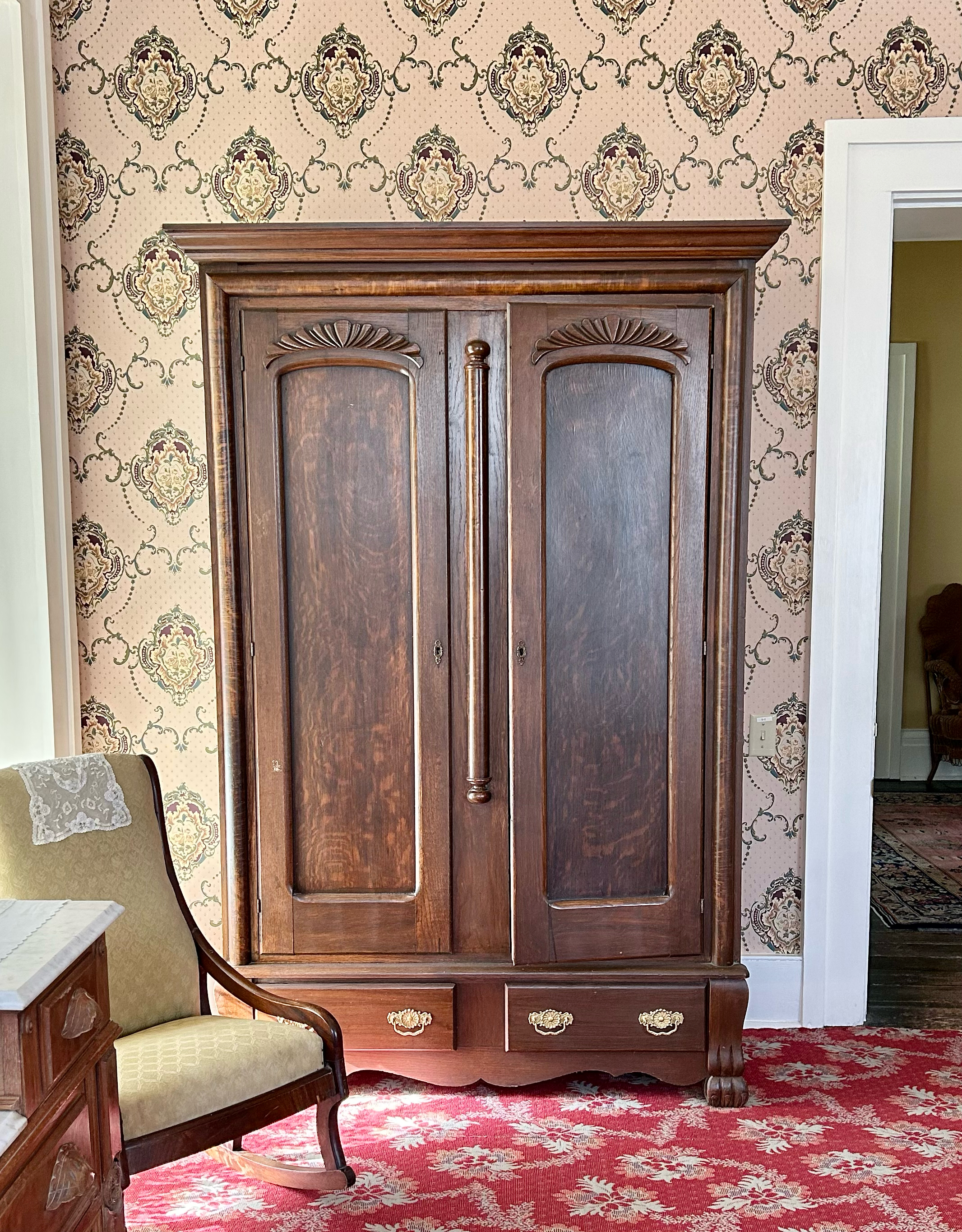
This American, late 19th century wardrobe belonged to the Cochran family. It is made of oak but feathered and faux grained to appear like mahogany. Feathering and faux graining could transform an inexpensive wood into something exquisite. In this case, the craftsman did not bother to continue the artifice on the interior of the wardrobe. The upstairs of the Neill-Cochran House originally had no closets, making wardrobes essential storage furniture.
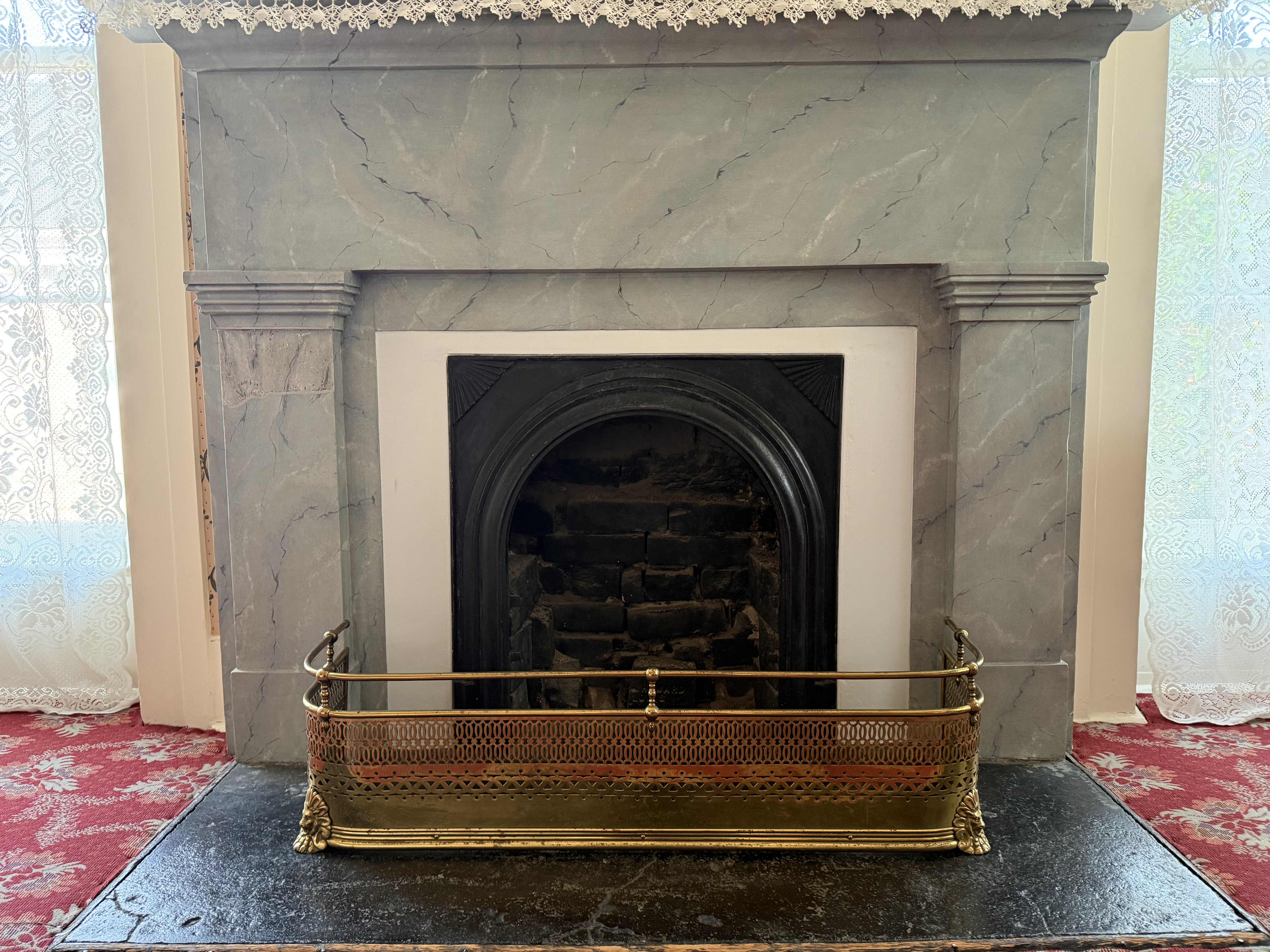
While conducting restoration work in 2010, we discovered something fascinating - the mantelpieces upstairs had been faux marbleized! A conservation expert uncovered a portion of the original painting - likely from the Neill time period. This is particularly unusual because these mantelpieces are upstairs, away from the public eye.
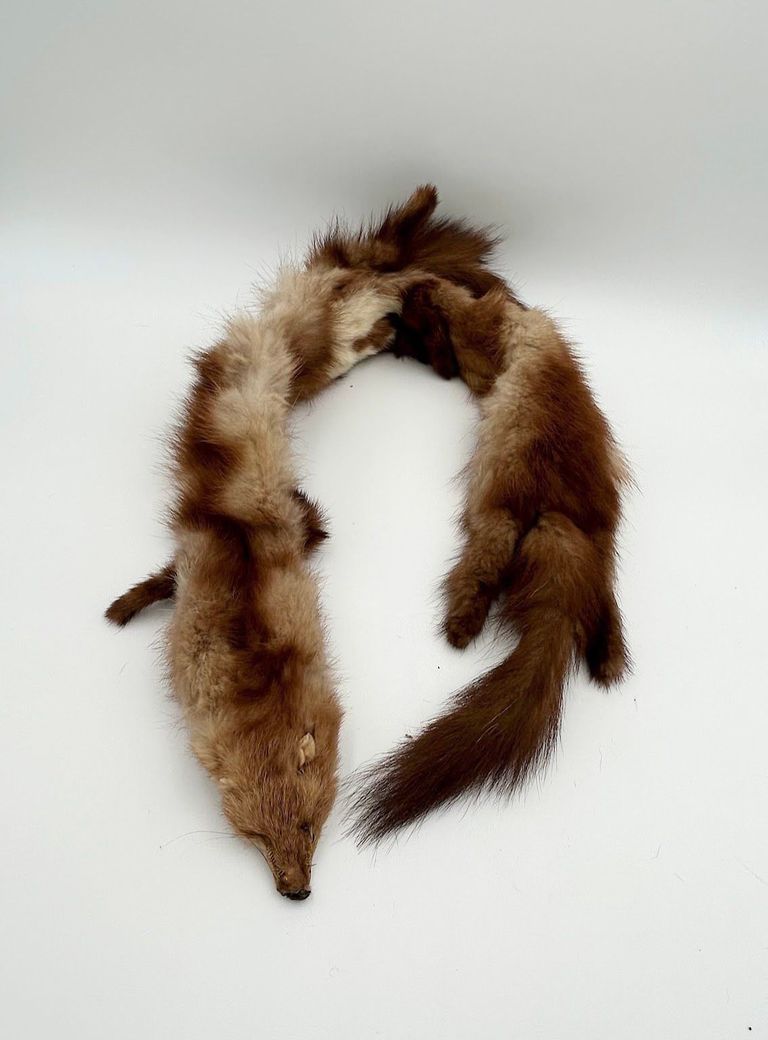
This fur scarf/stole was created from the furs of two foxes, sewn together. They were a popular way of showing status. This fur stole came to the Museum from the Cochran family. Likely it belonged to either Bessie Cochran (who, with Thomas Cochran, purchased the property in 1895) or her daughter-in-law Mary Mathilde Akin Cochran.
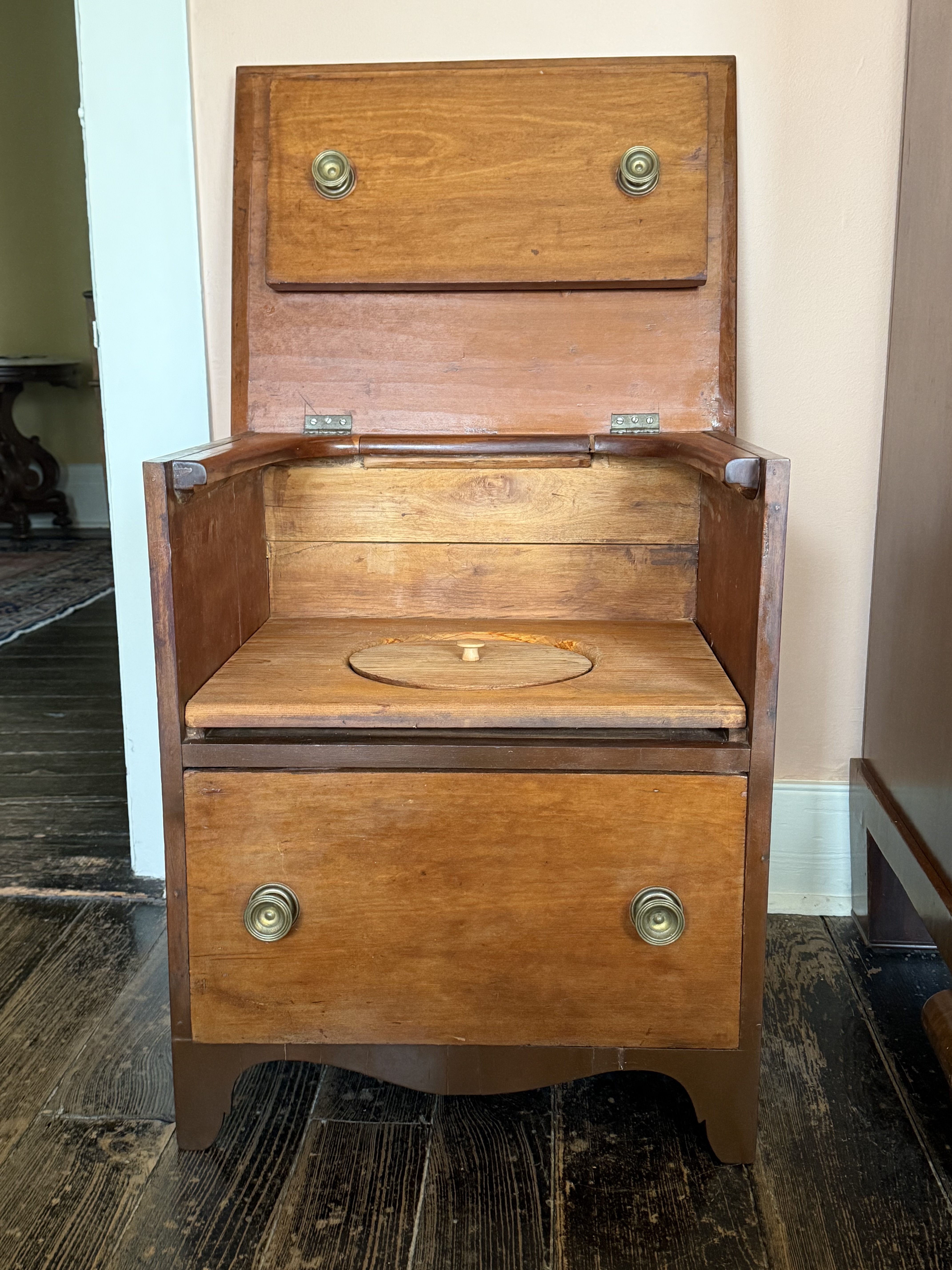
This early 19th century piece of furniture was made in New York and features a hinged lidded top with turned brass pulls. The lower portion has a faux drawer that hides a chamber pot. You would remove the drawer front to access the chamber pot for easy changing and cleaning.
Commode cabinets allowed for the discreet storage and comfortable use of a chamber pot in one's chambers at a time before the flush toilet. The word "commode" comes from the French word for "convenience."
Until the Cochran family added plumbing to the property at the end of the 19th century, the people who lived in the house either went outside to the outhouse to use the toilet or employed a chamber pot. If they were lucky, their experience was improved through use of a commode.