Main House First Floor
 French Parlor
Originally, this room would have served as a library/office. Today, it is decorated as a French Parlor, paying homage to the fad for all things French inspired by the US Centennial Exhibition in Philadelphia in 1876, the same year the Neills purchased the property.
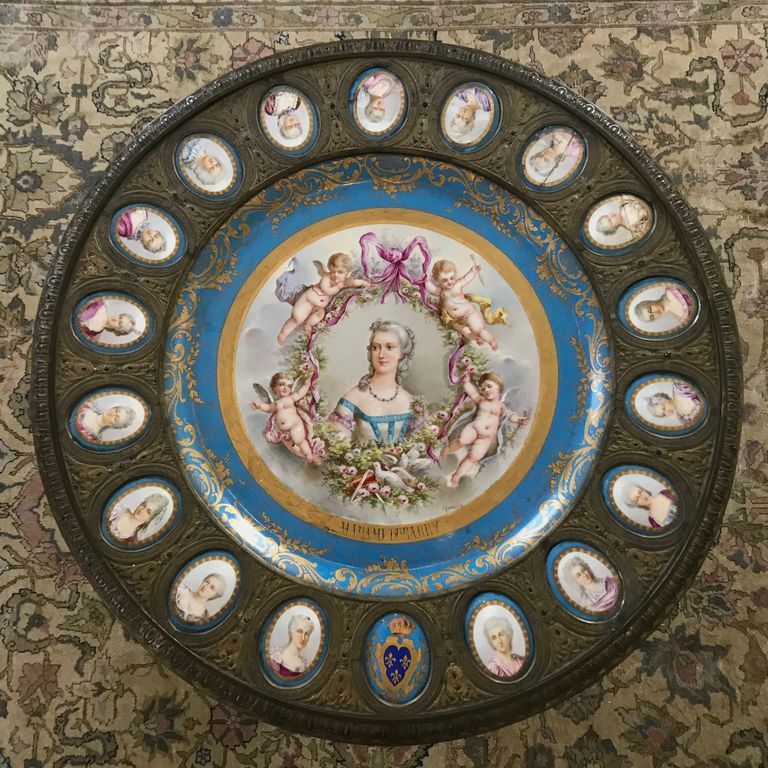
The center table in the middle of the NCHM French Parlor dates to the 1880s and is made of ebonized wood with ornate brass trim and a circular top adorned with Sèvres porcelain medallions. This is an unusual piece. Center tables were popular, as were medallions of different miniatures of ladies of the court. What is unusual is the choice to place the Madame du Barry (1743-1793), mistress of Louis XV, in the middle of the table. That space was typically reserved for a king or a figure from ancient history or mythology. It is likely, as a result, that this center table was commissioned by a woman. Many wealthy Americans displayed aristocratic French furnishings as a statement politically aligned to the principles of the American Revolution, as France was the government’s primary financial backer throughout the war. This center table fits into this socio-political framework. The furnishings of the French parlor are in the Rococo Revival style. This 19th-century style was considered fashionable in parlor rooms because of its beauty and elegance.
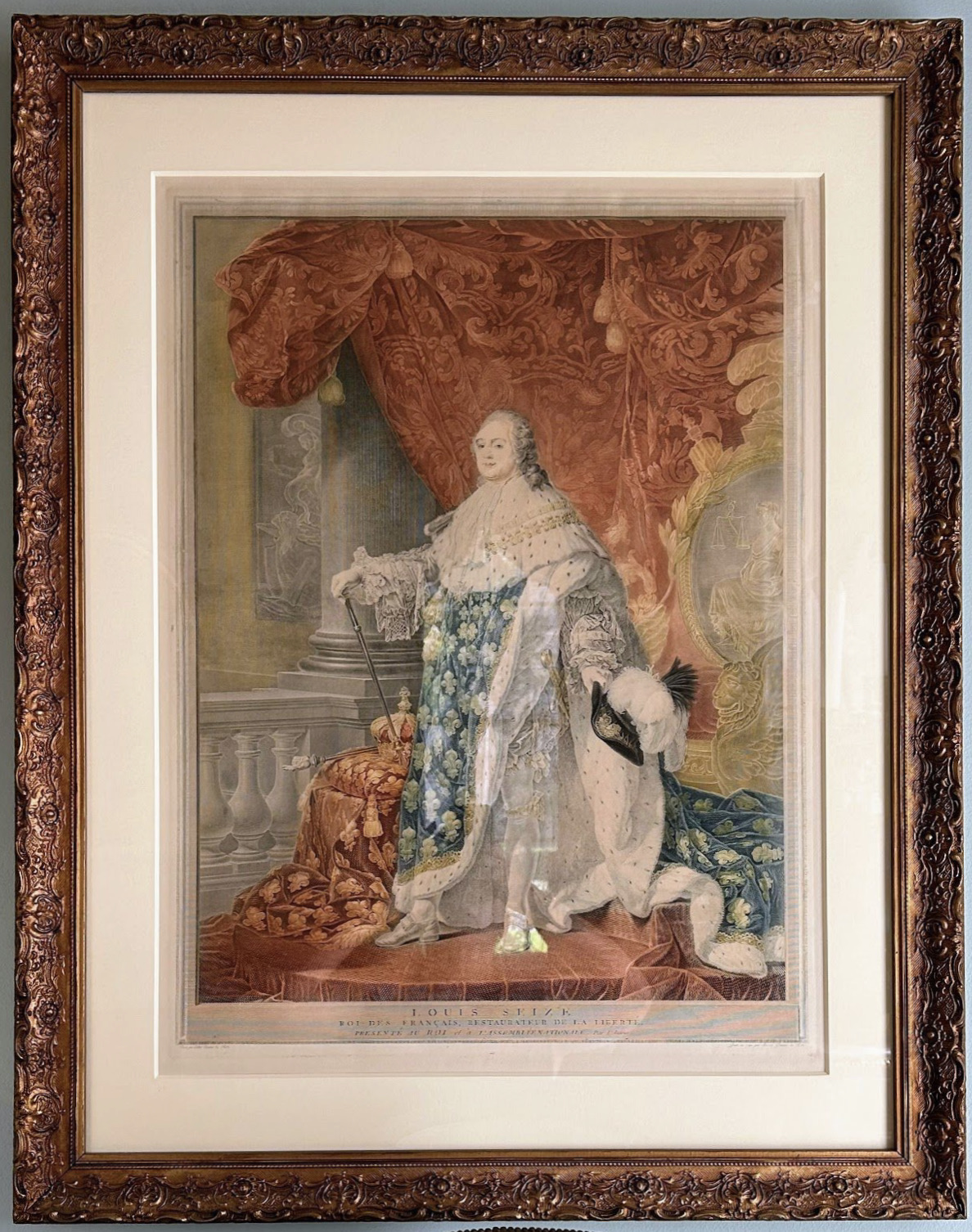
Hand-colored engraving depicting Louis XVI, King of France from 1774 to 1792, in court regalia, a pair with the engraving of Marie Antoinette nearby. His full-length oil portrait by the painter Antoine Callet (1741-1823) was engraved by Charles Clement Balvay, known as Bervic (1756–1822), in 1790. This print, which proclaims the king "Restorer of Liberty", was published shortly before Louis XVI was convicted of high treason and sentenced to death by guillotine. Bervic's meticulous reproduction of the opulent costume and elaborate setting of Callet's official state portrait of the king could not have been more ill-timed, yet the artist proved to be an enterprising printmaker. During the Revolution, he symbolically broke the plate in two, which seemed to help his flourishing career during the Republican period. After the Bourbon Restoration in 1814, he soldered the plate back together to pull new impressions.
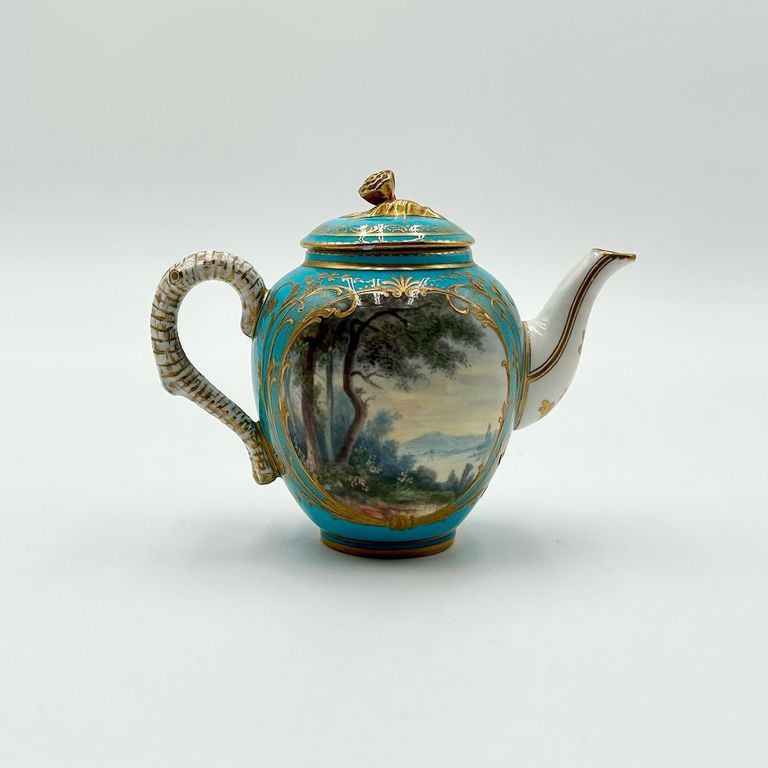
French, ca. 1758. Sèvres coffee set in blue, pink, and white porcelain. The French royal manufactory at Sèvres became the most influential and prestigious porcelain factory in Europe in the second half of the eighteenth century. Its products were characterized by innovation in both form and decoration, and by a consistently high level of technical skillset the original Sèvres production marks and quality. The bucolic landscape depicted reflects the ongoing popularity of "chinoiserie", a term used to describe the European fascination with an imagined and exotic Asia. In the eighteenth century objects in the chinoiserie taste were usually decorated with fanciful depictions of life in Asia as Europeans envisioned it. Especially the mountains in the background appear to be of Asian inspiration.