First Floor
This room can be confusing to visitors due to its size. In a building built for public entertaining, you might expect a larger dining room. When you look carefully, you see that the windows barely fit into the walls on either side of the mantelpiece - this is evidence that the room originally was intended to be larger. When the Hills were struggling to complete their project, they cut down the scope by reducing the size of the back rooms by approximately 4 feet.

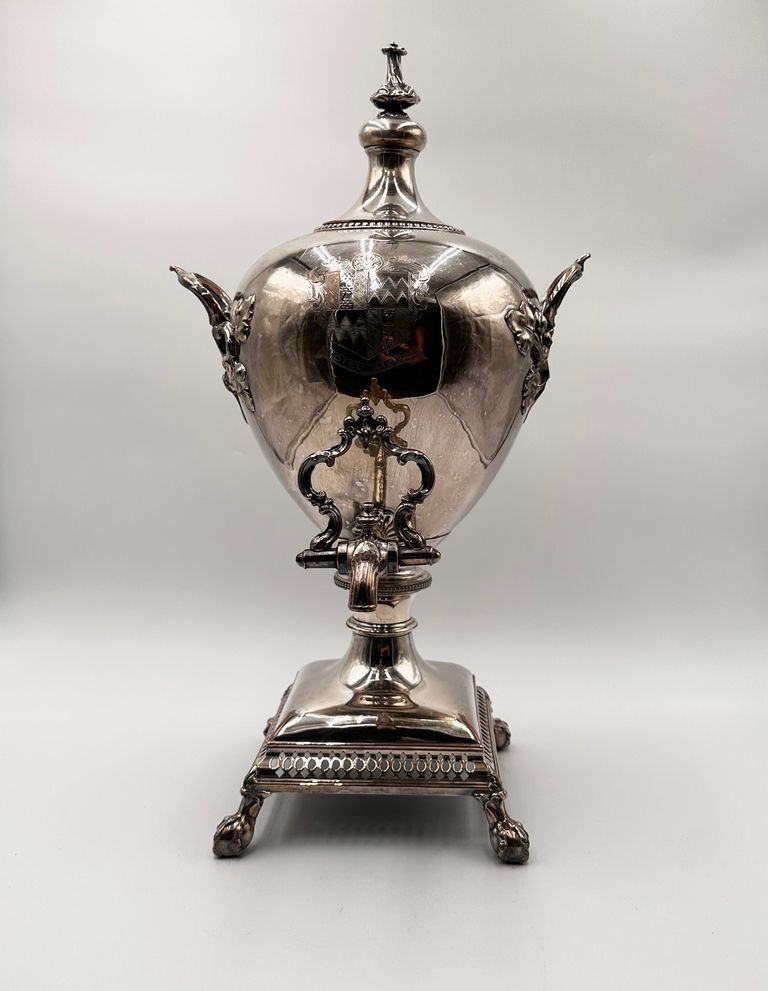
This is a Sheffield Silver Coffee Urn, an important component of dining in 19th century America. The urn could have held hot coffee, but equally it may have held hot water that would then be siphoned into a teapot to make hot tea. Sheffield silver plate is formed with thin sheets of silver and copper annealed together under pressure. It was extremely popular because it could be used to produce items at a fraction of the cost of their solid silver equivalent.
Sheffield Silver Coffee Urn. Sheffield silver plate is formed with thin sheets of silver and copper annealed together under pressure before being made into the required object. The technique was discovered about 1742 by cutler Thomas Boulsover, in Sheffield (Yorkshire), England. It was very popular because it could be used to produce items at a fraction of the cost of the solid silver equivalent. Sheffild silver pieces like our coffee urn were very popular at the turn of the last century.

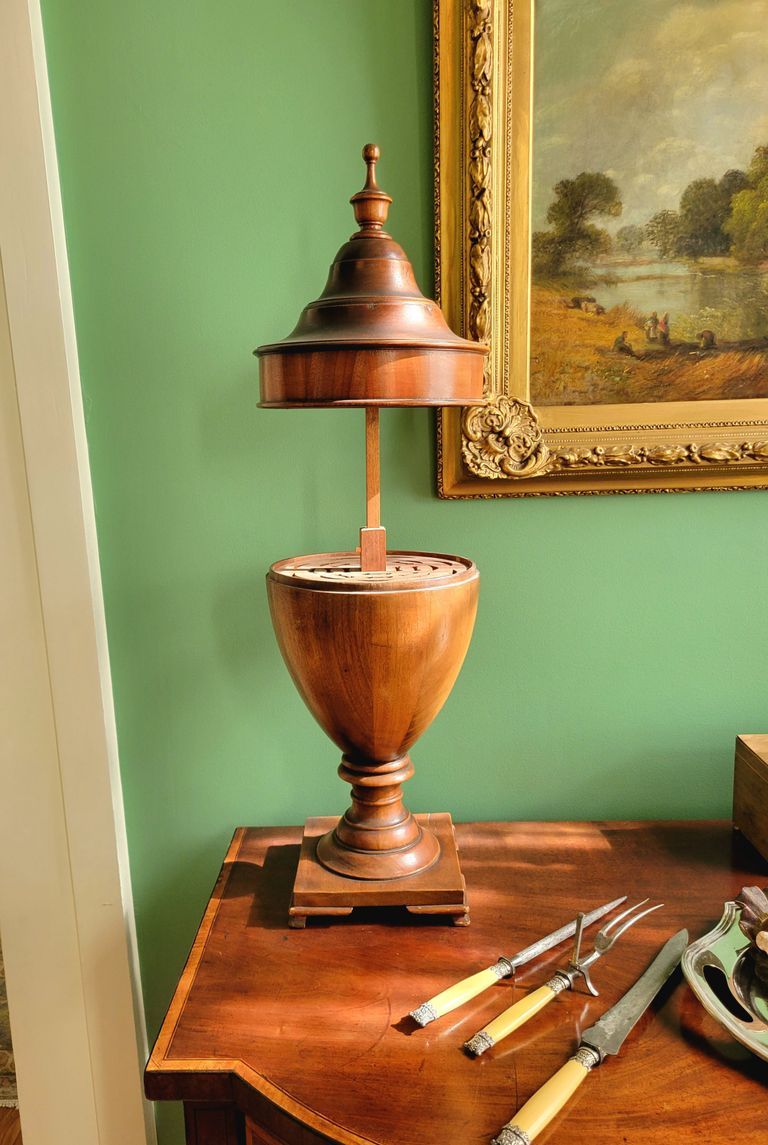
On the sideboard table in the Neill-Cochran House Museum Dining Room are a pair of English-made, 19th-century mahogany knife boxes in the shape of classical urns. Each box is raised on a turned stem resting on a square base with four small feet. The lid is topped with a turned finial that raises on a telescoping stem to reveal a pierced wood fitted interior arranged in concentric circles for storing cutlery. Decorative knife cases allowed people to keep precious silverware in the dining room, close at hand, while keeping the room tidy and beautiful.
Fitted cutlery cases were ideal for silver utensils because they prevented scratching and tarnishing at the points of contact. Knife urns, introduced by the British architect and designer Robert Adam (1728–1792), became a popular adornment in the late 18th century. The Neoclassical style and subsequent designs in the decorative and visual arts drew inspiration from the 'classical' art and culture of Ancient Greece and Rome. After the 1860s Neoclassical knife urns like this one found renewed popularity as antiques.
On the sideboard table in the Neill-Cochran House Museum Dining Room are a pair of English-made, 19th-century mahogany knife boxes in the shape of classical urns. Each box is raised on a turned stem resting on a square base with four small feet. The lid is topped with a turned finial that raises on a telescoping stem to reveal a fitted cutlery case. Decorative knife cases allowed people to keep precious silverware in the dining room, close at hand, while keeping the room tidy and beautiful. Fitted cutlery cases were ideal for silver utensils because they prevented scratching and tarnishing at the points of contact. Knife urns in the Neo-classical style became popular in the late 18th century and found renewed popularity as antiques after the 1860s. This handsome pair of knife boxes were a gift to the NCHM from Robert E. and Millicent Louise McDonald. You can see them, and all of our classical artifacts, Wed-Sun, 11-4pm. Source: Victoria and Albert Museum

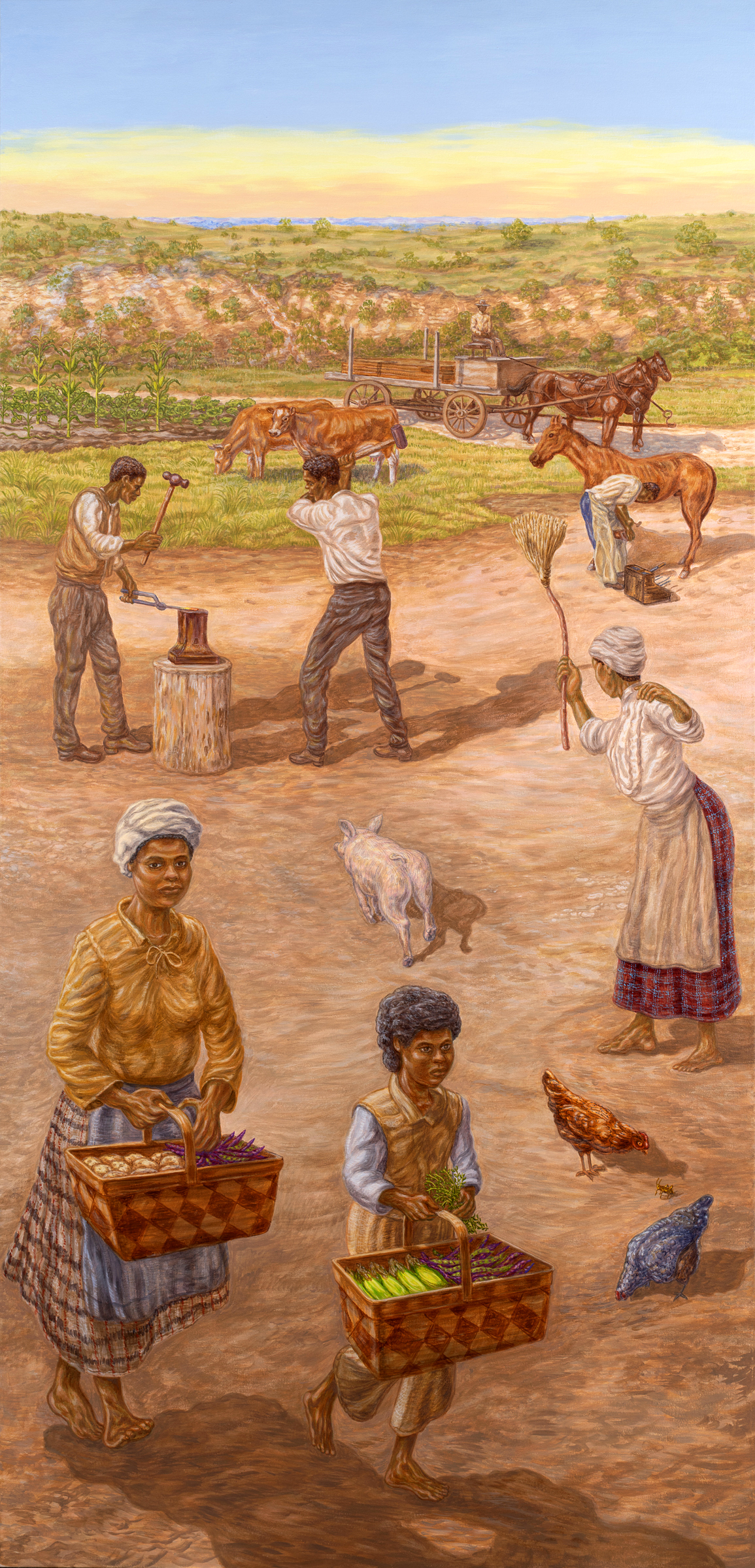
In this section of the "Give Us This Day" mural series, we look towards the West where we see the cliffs above Shoal Creek, the edge of the Edwards Plateau that runs through the city of Austin. One worker brings a wagon of lumber to the property while others shoe horses and shape new horseshoes. A woman shoes away a pig while another woman and daughter approach the house with vegetables from the garden in the distance.

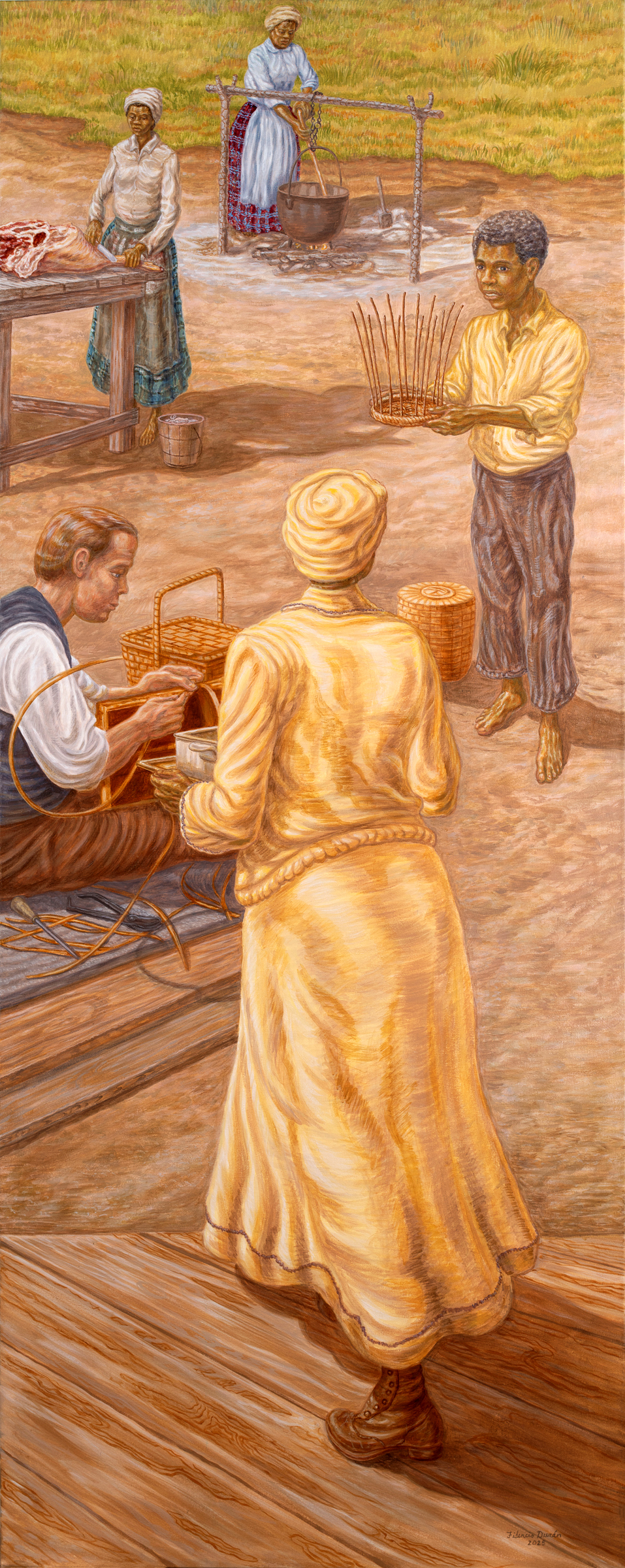
This section of the "Give Us This Day" mural series connects you to the work that made it possible for family and guests to sit at the dining room table to enjoy a meal. You see a woman exiting the dining room, having just served at the table. In the mid-ground the enslaved boy Lam teaches a blind young White man basketweaving. Further back a woman butchers a hog leg while boils lye for soap.