 Main House Front Yard

Welcome to the Neill-Cochran House Museum! While you’re on our site, we invite you (virtually) to step back in time, and to walk where Austinites have walked, lived, and worked for over 160 years.
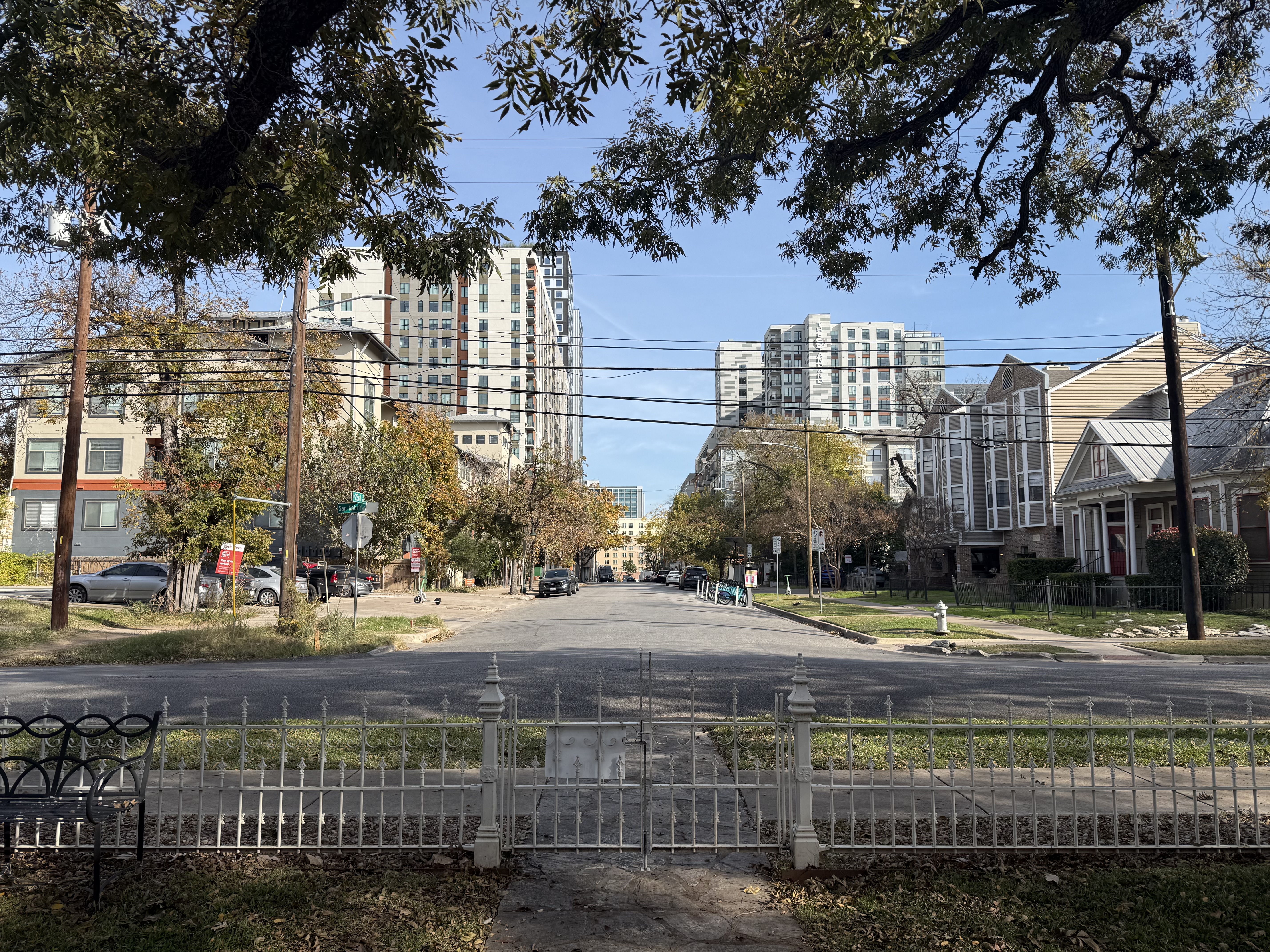
Originally this site was WAY out of town. Downtown Austin was 2 miles away, across dirt roads, to the degree there were roads at all. Look down our sidewalk and across the street. The property stretched to the east to where 23rd street dead ends today – the trees you see lining the street framed the carriage approach to the house and were put in by the Cochran family around the turn of the century.
Down the hill, behind the house, on Shoal Creek, native people camped for centuries. What became Austin was a popular crossing point, and sometimes camping ground, for native people, particularly in the area around Barton Springs. If you’re visiting Austin from elsewhere, Barton Springs with its 68-72 degree water year round is a great respite from the summer heat, as well as a living piece of Austin history.
But back to our part of Austin, federal troops sent to the city to enforce the peace (and emancipation) after the end of the Civil War also camped along Shoal Creek. That is likely part of the reason the government used this property as a hospital for over a year. To our north, the Wheatville Freedom Colony developed after emancipation, and the UT Austin community moved towards us from the east from the University's establishment in 1883 onward.